
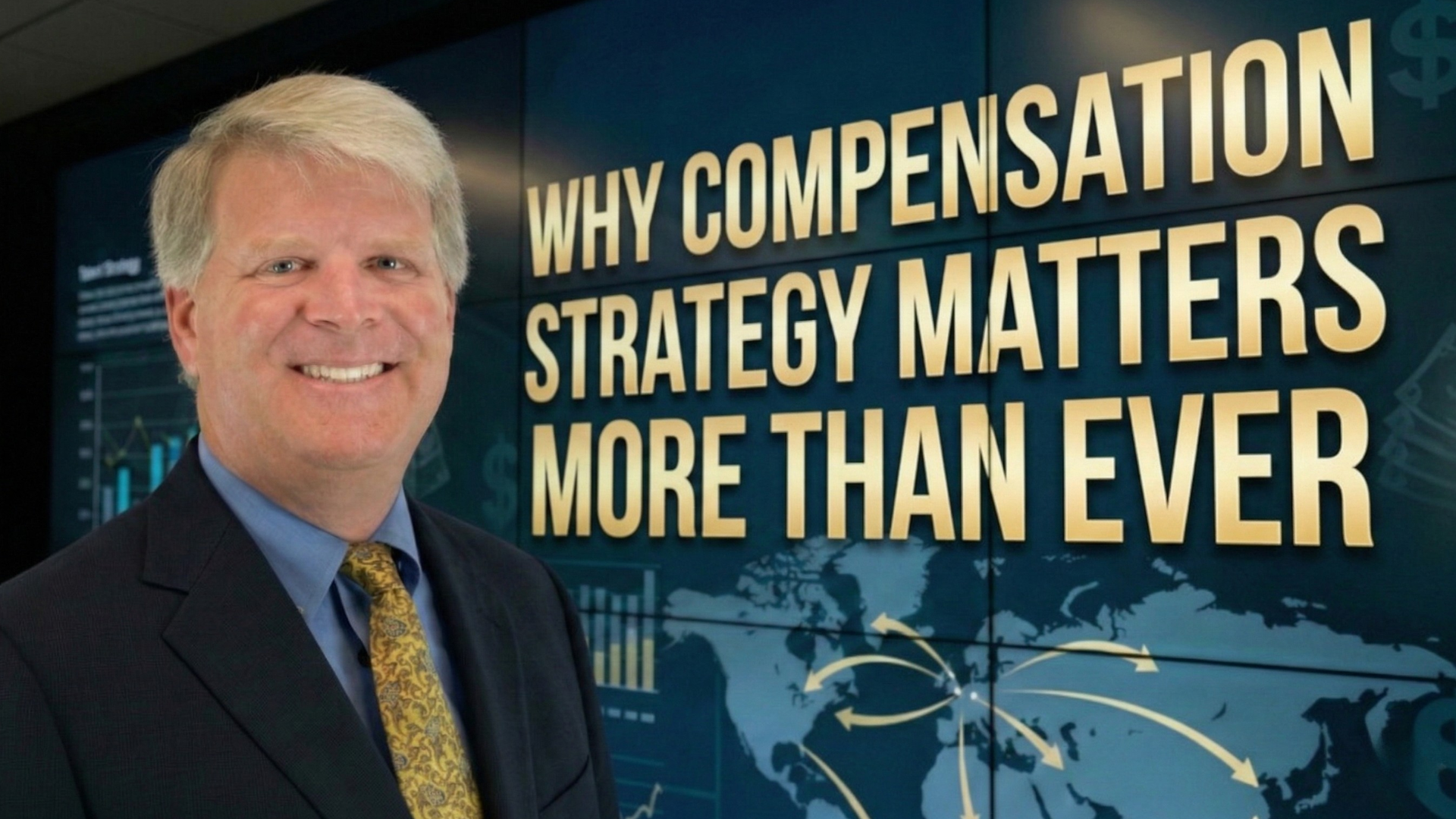
On-Location at Five Star Bank with EVP & CFO Heather Luck
A former Ernst & Young auditor, a military spouse, and a marketing major who quietly suspected she was an accountant the whole time. Heather Luck did not take a typical path to becoming Five Star Bank’s Chief Financial Officer. Today, she’s the financial architect behind one of California’s fastest-growing community banks.
“We don’t carry any dead weight,” Heather tells Amber Buker, Chief Research Officer at Travillian, in Part 2 of our on-location series at Five Star. And the numbers back her up. The conversation gives behind-the-scenes insights into how the bank pulls off what looks improbable from the outside: growing aggressively across people, technology, branches, and verticals, while still posting cost-of-funds reductions and an efficiency ratio in the low 40s. The discussion moves through CRE concentration management, deposit pipeline strategy, technology investments, and the running joke in Heather’s group that the five-year forecast always gets rewritten in the first two quarters.
Special thank you to John Maxfield of Maxfield on Banks for filming this one with us.
Listen Here: Spotify | Apple Podcasts
00:00: Episode Introduction
Amber opens with a quick framing of who Five Star is. A California-based, opportunistic bank growing assets, headcount, and business lines while still managing to bring cost of funds and the efficiency ratio down. She introduces this as the second installment in the Travillian and Maxfield on Banks collaboration series.
01:16: Welcome to Sacramento
The on-camera conversation kicks off with Amber thanking Heather for hosting the cameras inside Five Star’s offices. They trade quick impressions of the city, the weather, and how rare it is to walk into a bank lobby that actually feels alive.
01:30: From Illinois to Sacramento via Wyoming, Utah, and Texas
Heather walks through her path. She grew up in southern Illinois, moved to Wyoming at ten, went to the University of Utah for a marketing degree, and then followed her Air Force pilot husband to Texas before landing in California. She has now spent more than two decades in the state.
02:33: From Marketing Major to CFO
Amber asks how Heather ended up in finance. The honest answer is a slow realization. She graduated into the dot-com bust with a marketing degree and no marketing experience. Becoming a military spouse pushed her toward a career that could travel with her, and accounting turned out to be a natural fit. As she puts it, looking back, the signs were always there.
04:37: Managing Outsized CRE Concentrations
Amber points to Five Star’s CRE concentration as a percent of risk-based capital and asks how Heather manages it. Heather is candid that the bank looks heavily concentrated from the outside, but explains that CRE has been in the business plan since the bank’s founding 25 years ago. The defense, she says, is a robust monitoring program built specifically for higher-concentration institutions.
05:46: Underwriting Every Relationship Over $2 Million Every Year
Heather digs into the mechanics. Five Star re-underwrites every relationship over $2 million annually, which captures the bulk of the portfolio. New rent rolls, new appraisals, fresh borrower financials, and direct contact with the borrower are all part of the cycle. Internal policy limits kick in around the 700 percent mark, which typically aligns with when the bank starts thinking about a capital raise to support continued growth.
06:50: Diversification Across Verticals and Geographies
Beyond bank-wide limits, Heather explains that Five Star also sets concentration limits at the purpose-code level, looking at each vertical individually, including manufactured home communities, RV parks, and faith-based lending. With the RV park and manufactured home community books being nationwide, the bank gets both vertical and geographic diversification stacked on top of each other.
07:50: Why Cost of Funds Came Down
Amber pivots to the deposit side, where cost of funds dropped meaningfully between 2024 and 2025. Heather explains the wholesale book strategy. Brokered CDs and State of California CDs are used as a bridge between loan and deposit pipelines because deposit accounts take longer to stand up than loans take to close. As core deposits come in from new and existing customers, Five Star rolls those wholesale balances down, which is exactly what played out last year.
09:21: Investing in People, Tech, and Branches Without Wrecking the Efficiency Ratio
Amber lists everything Five Star has been spending on. New staff, the new Walnut Creek branch, a meaningful investment in financial reporting technology. None of it is cheap, and yet the efficiency ratio still landed in the low 40s, well ahead of the industry norm closer to 60. Heather is candid that the ratio is a metric she watches, but it’s not the lens decisions get made through.
10:22: Why Axiom Was Worth the Money
Heather tells the story behind the decision to adopt new reporting software four years ago, shortly after Five Star went public. The old reporting process was, in her words, download to Excel and pray. The bank knew it needed something more robust, more scalable, and more accurate. The solution the bank adopted was not the cheapest option, but it was the scalable one, and that’s the lens the executive team uses for technology decisions.
11:08: The Onboarding Project Wrapping in 2026
Heather previews what’s next. Five Star is finishing the customer-facing portion of a project to streamline and speed up depositor onboarding, which wraps in 2026. After that, the pipeline of improvement projects continues. She frames it as continuous improvement, not a finish line.
12:09: How a Strong Tech Stack Recruits Talent
That investment philosophy is already showing up in recruiting. Amber points to DJ Kurtze, EVP at Five Star Bank, who has credited the strength of the bank’s tech stack as a key factor in being able to bring his team over. Heather agrees that investments which look expensive on a line item often pay back in talent and scalability.
12:30: Budget Discipline and the Constant Pivot
Heather laughs about the running joke in her group. They put real effort into a five-year forecast every year, and within the first two quarters something new always shows up. Last year it was Cliff Cooper’s team and the food and agribusiness expansion. The bank’s posture is simple. They have a plan, and they will always pivot when the right opportunity walks in. They will not say no just because something is not in the budget.
13:54: Why Heather Is the Right CFO for Five Star
Amber observes that Heather is breaking the CFO mold, which is probably why she fits Five Star so well. Heather credits her background, eight years as an Ernst & Young auditor and life as a military spouse, where change is the only constant. She is wired for it, and most of her conversations with the team about pivots end up being short ones.
14:30: When Opportunism Bumps Into Audit Season
Asked when the entrepreneurial energy creates friction, Heather points to deadline-driven season. Ten-K, audit, SEC filings, regulatory reports. Her unspoken rule with the team is simple. Bring the opportunity, but if it’s February, please give finance a month to clear the deck before piling on.
15:49: Communication, Cadence, and the 24-Hour Response Rule
Amber connects this back to Mike Rizzo’s comment in Part 1 about Five Star’s flat organization, which makes communication crucial. Heather agrees and walks through the cadence. The executive team meets every other week, in person whenever possible, to talk through what each department has going on. With everyone running lean, every minute and every person matters.
17:12: What Surprised Heather Most About Banking
Asked what surprised her coming from outside the industry, Heather names two things. First, the tight-knit nature of the banking community and the universal “I don’t even know how I fell into banking” origin story. Second, the level of scrutiny and the volume of audits banks operate under. PPP, she says, was the moment she fully understood the responsibility, watching Five Star become a lifeline for both customers and non-customers who eventually became customers.
20:05: “No Dead Weight”
Asked if there’s anything else people should know about Five Star, Heather lands on the line that frames the whole episode. Five Star is a team of professionals where every single person contributes, and the bank does not carry any dead weight. The CFO’s role, in her words, is to serve shareholders, employees, and customers, all at the same time, and to do it really, really well.
That’s a wrap on our Five Star Bank series. Subscribe to our newsletter so you don’t miss what’s next.












)
&description=&image=https://www.travilliannext.com/wp-content/uploads/heather-luck-five-star-bank-cfo-travillian-next-part-2.png)