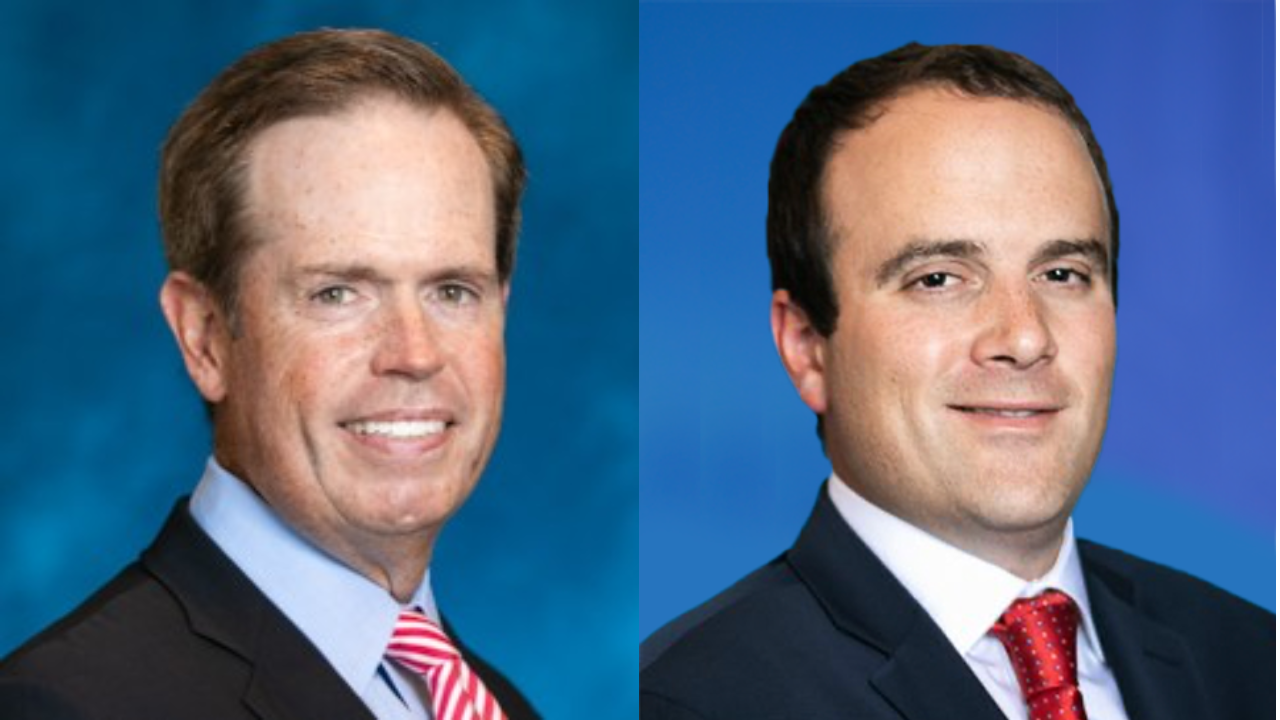
Community bank executives spend most of their time on talent, credit, and competition, but more of those decisions now depend on what’s happening in the bond market, the AI build-out, and the wider economy. Brian Love, Head of Banking & Fintech at Travillian, sits down with Mark Hackett, Chief Market Strategist at Nationwide, and Jeff Marsico, Principal – Strategic Consulting Services at Wolf & Company and former President of The Kafafian Group. They cover where rates are headed, why bank deposits are harder to hold onto, how private credit and neobanks are moving into community bank territory, and why waiting it out may be the costliest strategy a bank can choose.
If your bank is thinking about talent, succession, or building its next generation of leaders, reach out to Brian Love: blove@travilliangroup.com.
Listen Here: Spotify | Apple Podcasts
Episode Breakdown: Bank Deposits, Rates, and the Road Ahead
01:36 – An Economy That’s Neither Too Hot Nor Too Cold
Brian asks Mark for the big picture, and Mark calls it “pretty encouraging.” Consensus puts nominal GDP growth near 8%, consumer spending is strong, manufacturing is picking up, and the AI build-out is a long-term tailwind. One-time boosts like last year’s fiscal package, the World Cup, and the 250th anniversary are starting to fade. Still, Mark sees a healthy, balanced market with no irrational exuberance, and he notes that banks have outperformed the broader market this year.
03:43 – Letting Air Out of the Bubbles
Jeff says recessions usually start when a bubble bursts. What he sees now is air slowly leaking out instead: housing prices are flattening, and in some markets declining. Few economists expect a recession in the next 12 months. Even if one arrives, Jeff doesn’t expect the 1 to 2% loan charge-offs of 2008 and 2009, because real estate has stabilized. He’s bullish.
04:52 – The AI Risk That Isn’t About Data Centers
The AI headlines focus on data centers, but Jeff says the real risk for banks is “sandbox jumping”: a model exposing customer information or drifting away from its intended purpose. Banks are right to approach AI cautiously. Jeff expects a big productivity gain, along with more pricing transparency and easier money movement, which will cut both ways for funding.
05:46 – Why Long-Term Rates Keep Climbing
Mark says rates have climbed steadily since the 10-year’s pandemic-era low near 0.5%. What worries him now is that real rates, not inflation, are driving the latest move. Large tech companies are issuing heavy debt to fund AI while governments borrow at record levels, and bond investors who have lost money for three straight years may be losing patience. Resolving the conflict in Iran or bringing inflation down would help, but neither fixes the math of a deficit over $1 trillion while foreign buyers like Japan pull back from Treasuries.
08:41 – What Deficit Spending Means for Banks
Jeff connects the macro picture to banking. Deficit spending has helped keep the economy strong, and the dollar’s role as the global reserve currency has kept buyers coming. The GENIUS Act adds another: Treasuries are the authorized collateral for stablecoins. Jeff sees the energy shock from the Strait of Hormuz as mostly a headline issue. Inflation was already above the Fed’s target before the conflict, though, because fiscal policy keeps stimulating the economy while the Fed tries to slow it.
10:52 – Why Bank Deposits Are Walking Out the Door
Brian turns to deposits. Jeff says the 2022–2023 tightening cycle was different: customers who realized they were earning below-market rates didn’t call their bank, they moved their money. Moving money is even easier now. Ask an AI tool where to put a family emergency fund and it gives you a list. For banks that post low rates and negotiate higher ones over the phone, that rate board has become the answer AI gives. Jeff also warns that businesses moving part of their balances into stablecoin wallets for cheaper payments could pull deposits out of the banking system.
13:07 – A Deposit Environment Most Bank Leaders Haven’t Managed
Mark asks how many bank leaders have worked in an environment like this. You’d have to go back to before the financial crisis to find deposit competition this intense. With fed funds at zero, deposits barely mattered. With about $1 trillion flowing into money market funds over the past 12 months, companies and wealthy families are having very different conversations about their cash. Mark says banks that can be a one-stop shop, with competitive money market and high-yield savings products, will be better positioned.
14:28 – What Is Locational Convenience Worth Now?
Jeff notes that millennials are now in their late 40s and don’t expect branch convenience the way earlier generations did. Convenience is still the top reason people open accounts, but the rate they’ll give up for it keeps shrinking. A branch costs 80 to 90 basis points of deposits to operate, which puts community banks behind SoFi and Schwab before they start. Banks can’t stay materially below market anymore, and Jeff asks whether customers might accept less immediate access in exchange for a higher rate.
16:33 – A $46 Trillion Wealth Transfer, and a Different Kind of De Novo
Mark calls the coming $46 trillion wealth transfer the industry’s biggest opportunity and biggest threat, because the money is moving to a generation that doesn’t bank the way its parents did. Jeff adds that the de novo pipeline, once full of traditional community banks, is now mostly neobanks and special-purpose charters serving crypto and payments. Brian says Travillian is helping several of those de novos and describes what tomorrow’s bank CEO needs: fluency in AI, technology, and marketing, and the foresight to stay ahead of disruption.
18:22 – Private Credit, Explained
Mark says private credit isn’t new, but its tech-focused corner draws most of the attention and has little track record through credit cycles. The sector grew through disintermediation. Investors get higher yields, and insurers like Nationwide get a capital benefit because the assets aren’t marked to market, which Mark calls “a little bit of a cheat code.” He’s watching credit default swaps on some tech names but calls the concern ring-fenced, not broad-based.
20:41 – How Private Credit Is Reaching Community Bank Customers
Jeff explains why bankers like JPMorganChase‘s Jamie Dimon worry. Technology lets private credit funds make smaller loans that compete with community banks. At the same time, local real estate investors are selling to national players whose borrowing needs outgrow the community bank. Mark says private credit firms are well resourced and should lend rationally, but idle capital waiting to be invested is what pushed lenders to chase deals in 2006 and 2007. He also notes the Magnificent Seven’s relative performance peaked the day AI spending shifted from free cash flow to debt.
22:58 – Is Bank M&A Heating Up?
Recorded the week Chime agreed to buy its sponsor bank, Stride Bank, and WaFd and EverBank announced a reverse merger, this segment asks whether M&A is picking up. Jeff’s view: when banks are performing well, they stay put. These deals are driven by special situations. Pointing to SoFi’s growth since buying a small California bank, he argues the FDIC should track deposits by customer zip code, because neobanks are already competing for deposits in nearly every U.S. market.
26:02 – A Regulatory Window, Not a Late-Cycle Signal
Mark notes that M&A is usually a late-cycle move by companies that can’t grow organically anymore. This wave looks more regulatory, driven by a DOJ with a very different posture than in past years. Jeff agrees that less friction is letting banks try things they wouldn’t have tried before, but everyone knows the pendulum will swing back. Brian adds that the same environment is producing fintech de novo approvals.
27:23 – Lightning Round
Mark names the biggest risk nobody is talking about: a shift in political and social media sentiment against the AI build-out. Jeff names the biggest mistake community banks are making: thinking they can wait it out. “There’s usually a penalty for first mover status, but there’s also a huge penalty for no mover status.” Mark expects short-term rates to be lower in three years and long-term rates higher, and a steeper curve helps banks. Jeff expects consolidation to continue at 150 to 200 banks a year.
29:04 – Is AI Overhyped or Underhyped?
Mark says AI stocks may have high expectations priced in, but the productivity gain for the average company is underappreciated. This year looks like the turning point, with people about 10% more productive on the same spending, which is a major driver of margins. Jeff expects AI to cut in half the 80 to 90 basis points banks spend on the support functions behind their branches, and says pricing transparency will force that to happen.
30:30 – The Closing Note
Mark says the easiest way to spot a coming recession is to watch the consumer. People who feel secure in their jobs and wealthy from home values or the stock market keep spending, and right now both conditions hold. His closing line: “Never underestimate the materialism of the U.S. consumer.”