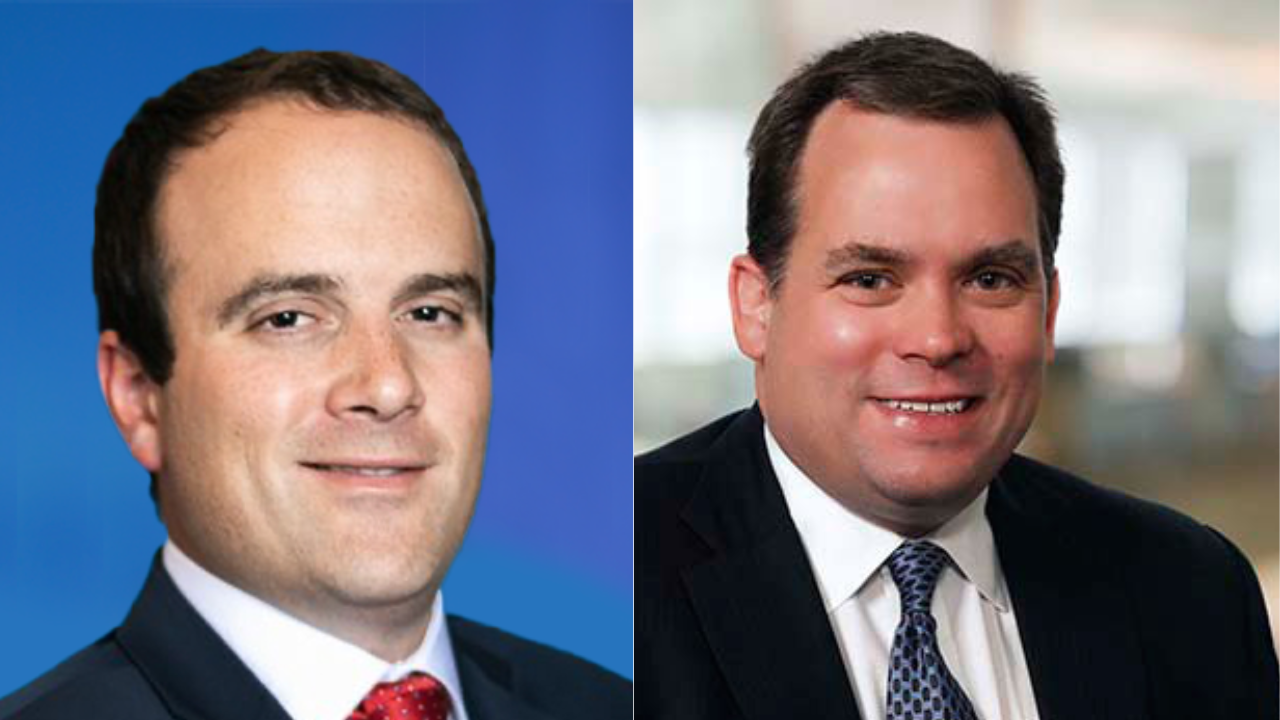
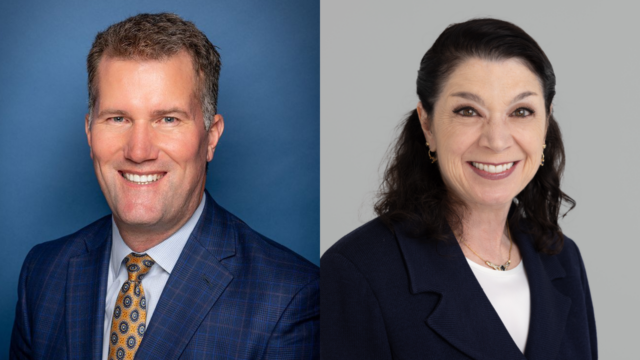
Amber Buker, Chief Research Officer at Travillian, sits down with Steve Plunk for a special conversation in the collaboration series between Travillian Next and Maxfield on Banks. Steve was the OCC examiner at the center of the Penn Square Bank failure — one of the most consequential bank collapses in American history.
Rewind to 1982. Steve gets sent to examine an unremarkable bank tucked in the back of an Oklahoma City shopping mall. Penn Square had become one of the highest-earning banks in the country, riding a wave of oil-and-gas euphoria and aggressive loan participations. Then Steve pulled the files, spotted one line on the balance sheet that didn’t add up, and the whole thing came undone. The fallout reached Continental Illinois, Seafirst, and well beyond.
Decades later, the lesson still holds: good banking comes down to people — disciplined leaders who know their true source of repayment, ask the question nobody else will, and build a bench deep enough to pass that discipline down.
LISTEN HERE: SPOTIFY | APPLE PODCASTS
At Travillian, helping banks find, grow, and keep that kind of judgment is the whole job, because a strong bench doesn’t build itself. If talent and succession planning are on your mind, reach out to Amber Buker (abuker@travilliangroup.com) and the Travillian team. We’d love to talk.
Steve Plunk on the Penn Square Bank Failure: Chapters & Timestamps
00:00: The Bank in the Back of a Shopping Mall
Amber sets the stage: how an unremarkable Oklahoma City institution became one of the country’s highest earners, why Steve was the one who questioned it, and why a 1982 story still speaks directly to bank executives today.
02:02: Back to 1982 — A U-Haul, a New Posting, and Penn Square
Meeting in Tulsa, Steve recalls arriving from Texas and being assigned to examine the bank in the mall. His first impression was of a supposed “paradigm shift,” a bank that claimed to have discovered a new way to link funding directly to oil-and-gas exploration.
02:42: Oil-and-Gas Euphoria and the Belief No One Would Question
Steve describes the invincibility myth around energy: if you could find oil and gas, you could sell it at ever-rising prices. He recalls a Saudi royal claiming the highest-value use of reserves was to leave them in the ground, capturing just how unquestioned the euphoria had become.
05:07: Trusting His Own Read — “Don’t Let Anybody Do Your Thinking for You”
Prior exams had focused on funds management, assuming asset quality was fine because Continental was underwriting. Steve’s first lesson as an examiner cut the other way: figure it out yourself. He recounts telling fellow examiner the bank might be insolvent, pointing to horrible numbers and a single overdraft of $20 million, a figure he’d never seen before.
06:46: Pulling the Thread — The Balance-Sheet Line That Unraveled Everything
Trained to account for every line on the daily balance sheet, Steve fixated on a typed-in entry called “other.” His assistant discovered it was interest, money Penn Square was paying on borrowers’ behalf when they couldn’t. The list of those borrowers turned out to be directors and premier customers, meaning supposedly performing loans sold upstream were substantially past due.
08:39: Temperament and Training — “I Represent the People of the United States”
Steve reflects on what made him dig in: pride in working for the U.S. Treasury and the rigorous, disciplinarian training of older, ex-military examiners in Texas, where the operative shame was a problem surfacing “on your watch.”
10:01: The Black-Box Source of Repayment
With real estate, you can identify repayment, Steve argues, but oil and gas invited bankers to “throw down an engineering report” and accept it. He never bought the black-box premise, even as energy departments, flush with volume and earnings, came to dominate lending decisions at Continental and elsewhere.
10:46: The In-House Engineer Who Could Out-Reserve Saudi Arabia
Penn Square’s own engineer, armed with a dedicated computer, could seemingly generate more reserves than Saudi Arabia, a vivid illustration of how repayment assumptions were manufactured to justify the lending.
11:00: Guns, Threats, and a Liquidator’s Warning
As Steve cleared out his office, a panicked liquidator urged him to leave for his own safety, citing threats that people were bringing guns to shoot him. At thirty and without a family, Steve shrugged it off: if they couldn’t shoot any better than they ran the bank; he figured he was in pretty good shape.
12:10: Congress, the “Fanatic Fringe,” and the Ripple No One Saw Coming
Steve recalls his boss, Cliff Poole, dividing the disaster into two phases: the “fanatic fringe” of Penn Square, Continental, and Seafirst who got what they deserved, and a wider band of big Texas energy banks swept up in the euphoria. What no one anticipated was how systemically it would spread.
12:54: When the Tide Goes Out
Borrowing Warren Buffett’s line about seeing who’s swimming naked when the tide goes out, Steve describes highly esteemed Texas institutions that were ultimately forced to merge or fail.
13:22: Manufactured Performance Then, Confetti Dollars Now
Asked where risk hides today, Steve connects Penn Square’s manufactured performance to later crises: the 2008 response of simply pushing money out the door, the trillions deployed during COVID, the dot-com bubble’s untethered valuations. He warns there are again too many dollars chasing too little value, “like confetti floating in the air.”
14:09: Jamie Dimon and the Discipline Euphoria Demands
Steve calls Dimon the banker of his generation, reaching back to Giannini and the early Bank of America for a comparison, and notes Dimon’s evident unease about crypto and private funds. Banking is hardest, he says, precisely when opportunity is easy to grab and discipline is what’s required.
15:19: Concentration Risk and Reading CRE the Right Way
Steve isn’t alarmed by commercial real estate concentrations in banks with strong staff. The real danger sits in acquisition, development and construction (ADC) lending, which he ties to roughly 80% of bank losses, contrasted with a seasoned client whose director “can always get in my car and go find my collateral.”
16:37: What a Well-Run Bank Looks Like
Drawing on his years running a bank, Steve returns to fundamentals: asset quality, capital, earnings. Known as an aggressive examiner, he describes toning it down once those boxes are checked, backing off and letting well-capitalized community banks “make sausage.”
17:37: Testifying to a Room That’s Never Seen a Bank Exam
Steve reflects on congressional hearings and the disconnect when lawmakers question professionals about work they don’t understand, recalling the mentors and colleagues that prepped him hard before his testimony.
18:38: The OCC’s Risk-Based Shift and “A Boulder in a Stream”
On the OCC’s move toward more discretionary, risk-based supervision, Steve professes deep affection for the agency that “took me off the farm in West Tennessee.” Yet he believes all the regulators have been overwhelmed by technology and scale, invoking a colleague’s image of the agency as a boulder in a stream the water eventually flows over and around.
20:26: When Capital Is the Only Governance Left
The old framework worked when government effectively backstopped much of the balance sheet, letting banks take measured risk. Now, Steve argues, capital is the only real governance, touching on Dodd-Frank, the 2024 wave of banking-as-a-service consent orders that killed businesses, and the loss of retail deposits as a stabilizing “ballast.”
22:31: Saving Liberty, Founding Shiloh, and Passing on the Discipline
Steve recounts the dogfight to save Liberty Bank, where he served as President after leaving the examiner’s office, before its sale to Bank One (now JPMorgan), then hanging out his own shingle. Shiloh Management Group specializes in asset-quality and loan reviews, and in 20-plus years has never had a client go under an enforcement action. He speaks to what he’s passing on to the young professionals coming up behind him.
24:30: “Banks Fail Because They Deserve It. It’s Optional.”
Steve’s credit philosophy in one line: catch the lit match the moment it hits the ground, before it becomes a wildfire. Banks go under enforcement actions, he insists, only because they deserve it, and it’s entirely preventable with discipline and modest investment up front.
25:07: Reconnecting with History, Thanks to John Maxfield
Steve credits John Maxfield, who hosted him at his symposium, with prompting him to reflect on a chapter he’d never paused to consider, having gone straight from Penn Square into the fight to save Liberty. Only now, he admits, does he see what a great story it is.
25:42: Closing Reflections
Amber closes on why a story from 1982 feels so current: the names change, but the business model still asks the same core question. Do we understand the risk, and do we have the discipline to question the story?
This conversation is part of the collaboration series between Travillian Next and Maxfield on Banks. Check out two more from the series, our two-part conversation with Five Star Bank.